Evaluation
Your visit begins with a review of movement, posture, symptoms, and tissue tension patterns that may be affecting how you move.

Call us (864) 875-4341
FAQChiropractic Services
Supportive soft tissue care using gentle suction to reduce tension and help the body move with less restriction.
Introduction
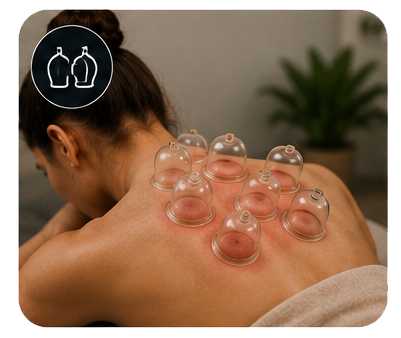
Cupping therapy is a supportive soft tissue service that uses gentle suction to help address soft tissue tension, improve local circulation, and support mobility when clinically appropriate. It may be added when muscle tightness or mechanical tension is affecting how the body moves.
At CorAxis, cupping is used as part of personalized chiropractic care rather than as a one-size-fits-all approach. The focus stays on movement, posture, function, and helping restricted areas move with less resistance.
Gentle suction support for soft tissue mobility, circulation, and function.
Cupping therapy uses cups placed on the skin to create gentle suction over areas of soft tissue tension. At CorAxis, it may be used to support mobility, reduce mechanical tension, improve local circulation, and help restricted tissues move more comfortably as part of a broader movement-focused visit.
Cupping is not used the same way for every patient. CorAxis adjusts the visit based on tissue findings, restricted movement, comfort, and the goals of your care.
When Patients May Benefit
CorAxis Approach
Each visit begins with movement assessment, posture review, soft tissue findings, daily activity discussion, and a conversation about your symptoms and goals. CorAxis looks at how your body is moving and where soft tissue tension may be limiting mobility before deciding whether cupping is appropriate.
Not every patient receives cupping. It is added only when it fits the visit findings and may support soft tissue mobility, reduced tension, circulation support, and better function.
Your Visit
Your visit begins with a review of movement, posture, symptoms, and tissue tension patterns that may be affecting how you move.
If appropriate, cups are placed on targeted areas based on your findings and the goals of the visit.
CorAxis checks how your body responds so the visit stays focused on mobility, function, and movement quality.
When appropriate, you may receive simple movement, posture, or activity suggestions that support your progress between visits.
Temporary Marks
Some patients notice circular marks after cupping. These are a temporary tissue response to suction and can vary in color and intensity from person to person.
The marks often fade over several days. CorAxis explains what to expect before using cupping so you understand how the area may look after the visit.
Related Services
Frequently Asked Questions
Most patients describe cupping as a pulling or lifting sensation. CorAxis adjusts suction based on your comfort and the goals of the visit.
Temporary marks can appear because of how the tissue responds to suction. They vary from person to person and often fade over several days.
Not necessarily. The marks are a temporary tissue response and their color or intensity can vary based on the area and the amount of soft tissue tension present.
Visit length depends on your evaluation findings, your goals, and whether cupping is combined with other supportive services during the visit.
Yes. When appropriate, cupping may be combined with chiropractic adjustments, soft tissue support, or movement-based services during a visit.
CorAxis first reviews posture, movement, tissue tension, daily activities, and your visit goals to decide whether cupping matches the needs of the area.
Yes. When appropriate, cupping may be used to support circulation, mobility, and recovery support in tissues stressed by activity.
No. CorAxis personalizes the visit based on your comfort, tissue findings, movement restrictions, and what is clinically appropriate.
It may be used when posture-related soft tissue tension, upper back tightness, or restricted movement is influencing how you move during the day.
Yes. When appropriate, CorAxis may recommend simple movement, posture, or activity strategies that support your mobility between visits.
Schedule Appointment
If soft tissue tension, posture-related tightness, or restricted movement is affecting how you feel, CorAxis can help guide the next step with personalized chiropractic care.